
Behind the Numbers: Why Fewer Job Seekers Distort the Unemployment Rate
What you need to know: The labor force participation rate - the share of adults working or actively looking - has been falling for decades, and more noticeably since April 2025. When people stop looking for work, they disappear from the data, making unemployment appear lower than it actually is.
Why it matters: A low unemployment rate can give the impression of a hot job market - but if it’s being propped up by people leaving the workforce, that’s a bad sign. That’s because it means the labor market isn’t as strong as it seems, especially if prime-age workers (25-54 years old) are sitting out. Meanwhile, if more people are discouraged or leaving the workforce, it can imply issues with wealth creation later - but also may prove worthwhile for those workers as less supply of people can push their wages higher as companies compete for labor.
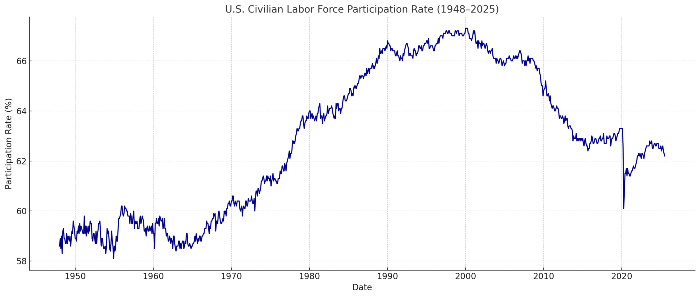
Figure 1: St. Louis Federal Reserve, Dunham, August 2025
“In a world older and more complete than ours they move finished and complete, gifted with extensions of the senses we have lost or never attained, living by voices we shall never hear.”
If someone stops looking – aka they’re discouraged, they retire, they check out - they’re then dropped from both the numerator and the denominator - making the unemployment rate fall without a single job being added.
That then means the unemployment rate falls - not because hiring improved, but because people disappeared from the count.
- Here’s an example: Say 10 million people are unemployed and 140 million are in the labor force. It would look like UR = 10 / (140 + 10) = 6.7%
- Now, say 2 million of those unemployed give up looking. Maybe they’re discouraged, maybe they retire. Either way, they’re no longer counted.
- So, you subtract those two million from the original 10, thus UR = 8 / (140 + 8) = 5.4%
No new jobs. No hiring boom. The rate drops simply because the labor force shrank.
And that’s what we’re seeing now.
Since April, labor force participation has slipped - especially among younger workers and baby boomers. It’s now down to 62.2%, from 62.6% just a few months ago. That might not sound like much, but in real terms, it means tens of thousands of working-age Americans have exited the labor force2. And that matters - because it now means barely two-thirds of working-age adults are engaged in the workforce in any capacity.
This decline has helped push the unemployment rate lower, but the momentum behind hiring is weakening. And let’s not forget - this isn’t new. Labor force participation has been falling since its 2000 peak of 67.3%. It's a long-term structural trend - one that distorts the data and creates second-order consequences across the economy.
The point is a falling unemployment rate doesn’t always mean strength. Sometimes, it’s just math talking. And if we accounted for all those who’ve dropped out of the labor force, the unemployment rate - even with its recent uptick - would likely be higher than reported.
Keep that in mind next time you hear the blanket unemployment rate. . .
Disclosures
This communication is general in nature and provided for educational and informational purposes only. It should not be considered or relied upon as legal, tax or investment advice or an investment recommendation, or as a substitute for legal or tax counsel. Any investment products or services named herein are for illustrative purposes only, and should not be considered an offer to buy or sell, or an investment recommendation for, any specific security, strategy or investment product or service. Always consult a qualified professional or your own independent financial professional for personalized advice or investment recommendations tailored to your specific goals, individual situation, and risk tolerance.
Information contained in the materials included is believed to be from reliable sources, but no representations or guarantees are made as to the accuracy or completeness of information.